
Two associates buy the same batch of leads at 9 a.m. One calls at 9:04. The other clears email first and calls at 10:20. By noon, the first associate has three appointments booked. The second is still leaving voicemails.
That gap isn’t luck, and it isn’t script quality. It’s speed to lead — the time between when a prospect submits their information and when an associate actually reaches them. Every LegalShield associate has heard “follow up fast,” but few know the actual numbers behind why it matters, or how to build a routine around it. This post breaks down how fast is fast enough, what happens to your contact rate as minutes tick by, and how to build a speed-to-lead habit that doesn’t burn you out.
Why Speed to Lead Determines Whether You Even Get a Conversation
A new LegalShield lead is not a name sitting in a spreadsheet waiting patiently for you. It’s someone who, minutes ago, typed their number into a form because they had a legal worry — a landlord issue, a contract question, a family matter — on their mind right then. That window of urgency closes fast. If you’re not the first call they get, you’re competing with whatever else grabbed their attention: a text from a friend, another ad, or simply forgetting why they filled out the form in the first place.
Speed to lead isn’t about looking eager. It’s about catching the prospect while the problem that made them fill out the form is still top of mind. The first associate to reach a lead with genuine urgency in their voice usually wins the appointment — not because they out-sold anyone, but because they were the only one who showed up while it still mattered.
How Fast Is Fast Enough?
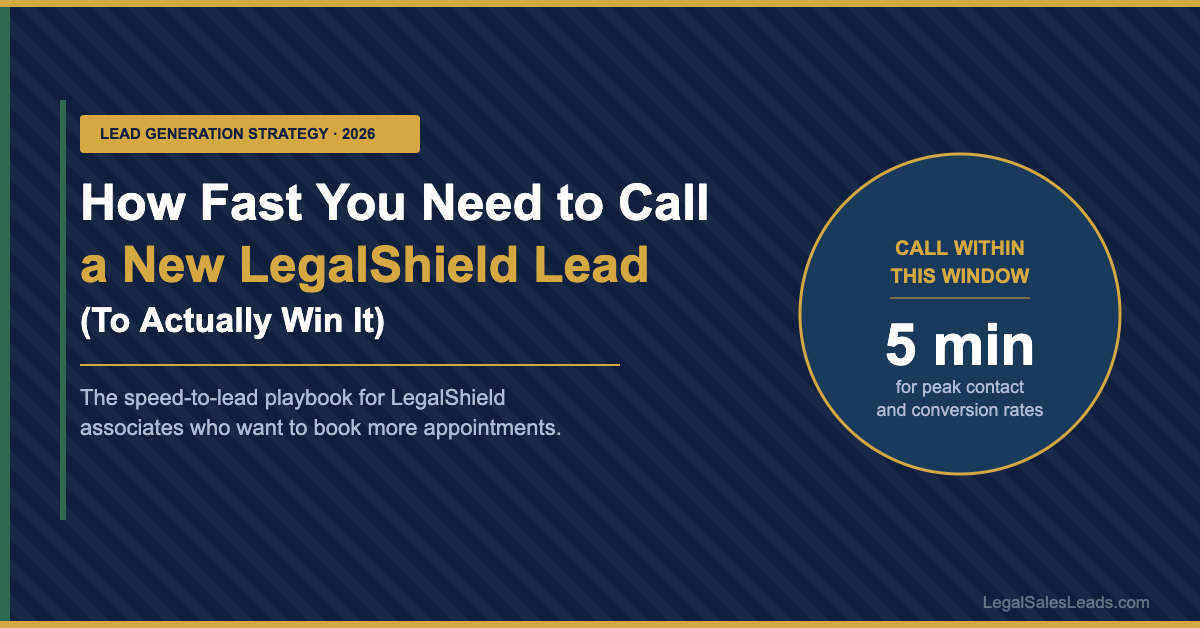
There’s no single magic number, but the pattern is consistent across lead-based sales: contact rates fall off sharply after the first few minutes and keep falling the longer you wait. A lead you call within five minutes behaves like a warm introduction. A lead you call the next morning behaves like a cold call — except now they’re mildly annoyed you took so long.
| Time to First Call | Typical Contact Rate | What It Feels Like to the Prospect |
|---|---|---|
| Under 5 minutes | Highest | “That was fast — they must actually want my business.” |
| 30 minutes | Noticeably lower | “Oh right, I filled that out. Who is this again?” |
| Same day, hours later | Low | Voicemail. They’ve likely moved on or gotten another call. |
| Next day or later | Lowest | Treated as a cold call, or ignored entirely. |
If you only change one habit this month, make it this: check for new leads on a fixed schedule — not “whenever I get to it” — and call before you do anything else with them.
Building a Speed-to-Lead Routine That Doesn’t Wreck Your Day
Being fast doesn’t mean being glued to your phone. It means removing the friction between “lead arrives” and “phone rings.”
Set Notification Triggers, Not Manual Checks
Turn on push or text notifications for new lead deliveries so you’re not refreshing a dashboard. The goal is to know within a minute or two of a lead landing, not the next time you happen to open your email.
Protect Call Windows on Your Calendar
If you can’t drop everything the instant a lead arrives, block two or three short windows in your day — mid-morning, early afternoon, early evening — where your only job is calling anything that came in since the last window. This keeps your worst-case response time under an hour instead of under a day.
Have Your Opener Ready Before You Dial
Speed only helps if the call itself doesn’t waste the urgency you just captured. Know your first line before you dial — referencing the specific reason they reached out (“I saw you had a question about a rental agreement”) — instead of a generic “hi, got a minute to talk about legal plans?”
Key Insight
Exclusive, opt-in leads make speed worth the effort. If a lead has already been sold to three other associates, being fast just means you’re first in line to hear “someone already called me.” Working exclusive leads protects the value of every minute you save.
What to Do When You Can’t Call Immediately
Nobody hits five minutes every time. When a call has to wait, send a short text right away instead — something like “Hi, this is [name] with LegalShield, got your info about [topic], will call shortly.” It costs 20 seconds, keeps you top of mind, and often gets a reply before you even dial.
- Text first if you can’t call fast. A quick text preserves the relationship until you can talk live.
- Never let a lead sit past 24 hours untouched. Even a delayed call beats no call — but treat it as damage control, not standard practice.
- Batch-check on a schedule you can actually keep. Consistency beats sporadic bursts of speed.
Speed-to-Lead Checklist
- Turn on instant lead notifications — don’t rely on manually checking a dashboard.
- Aim for contact within 5 minutes whenever you’re available.
- Block dedicated call windows to catch anything you miss in real time.
- Text immediately if you can’t call to hold the prospect’s attention.
- Work exclusive, opt-in leads so your speed isn’t wasted on a shared list.
Speed Only Pays Off With the Right Leads
Get exclusive, opt-in LegalShield leads delivered in real time — so every fast call reaches someone who hasn’t already heard your pitch from three other associates.