
A LegalShield associate named Marcus once had two identical leads land in his inbox the same afternoon. He called the first one back in four minutes and booked an appointment. He called the second one back the next morning — and got a voicemail box that was already full, because three other opportunities had gotten to that prospect first.
If you’ve ever wondered how fast should you call a LegalShield lead, the honest answer is: faster than you think. Speed-to-lead isn’t a minor efficiency tweak — it’s one of the single biggest levers separating associates who consistently close deals from associates who burn through opt-in leads without ever getting a live conversation. This post breaks down exactly why response time matters, what the data says about the drop-off curve, and how to build a cadence that gets more of your leads on the phone.
Why Speed-to-Lead Determines Whether a LegalShield Lead Converts
When someone fills out a form requesting information about LegalShield or IDShield, they’re in a moment of active intent — they just typed their name, phone number, and a reason they’re interested. That window doesn’t stay open long. Within minutes, their attention moves on to the next email, the next tab, the next distraction. The associate who reaches them while that intent is still fresh has a dramatically higher shot at a real conversation than the one who calls hours — or a day — later.
This is true across nearly every industry that sells from inbound leads, and it’s especially true for legal service plans, where the buyer is often comparing the idea of LegalShield against “I’ll think about it and figure this out later.” Every hour of delay gives that hesitation more room to win.
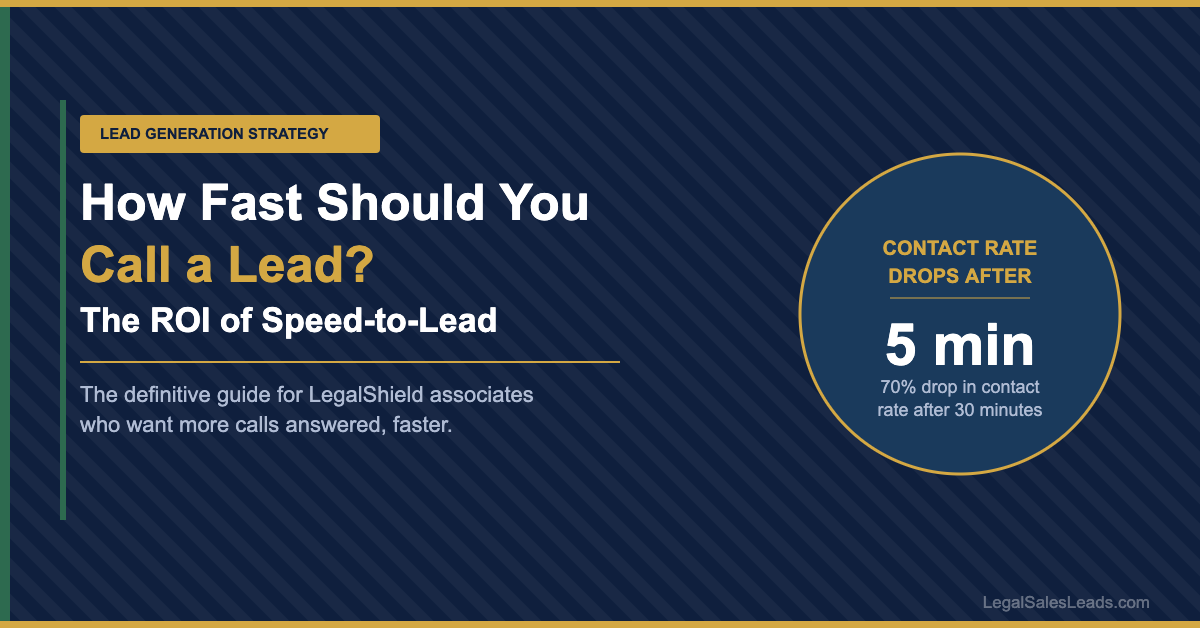
Studies across inbound sales teams consistently show contact rates fall by more than 70% once a lead sits uncalled for over 30 minutes, and keep declining sharply after that.
The Response-Time Benchmark for LegalShield Leads
There’s no single magic number, but the pattern is consistent enough to build a rule around: treat the first five minutes as the highest-value window you’ll ever get with that lead. After that, every 15-minute block of delay meaningfully lowers your odds of a live pickup.
What “Fast” Actually Looks Like in Practice
For most associates working leads part-time around a day job, calling inside five minutes isn’t realistic every time — and it doesn’t need to be. What matters is having a system that gets you to “fast enough” consistently, rather than relying on whenever you happen to check your phone.
| Response Window | Typical Contact Rate | What It Means for You |
|---|---|---|
| 0–5 minutes | Highest | Prospect is still actively thinking about their plan |
| 30–60 minutes | Moderate, dropping fast | Other priorities have taken over their attention |
| 24+ hours | Low | They may have forgotten submitting the form entirely |
Building a Follow-Up Cadence That Actually Gets Answered
Speed on the first call matters, but persistence on the follow-up sequence is what turns a “no answer” into a booked appointment. Most leads aren’t lost because the associate didn’t try — they’re lost because the associate tried once, got voicemail, and moved on.
A Simple 7-Touch Cadence
- Call 1 — Immediately. Call the moment the lead comes in, even if it’s an awkward time of day.
- Text 1 — Right after Call 1. A short text (“Hey, tried reaching you about the LegalShield info you requested — call or text back anytime”) often gets replies calls don’t.
- Call 2 — Same day, a few hours later. Different time of day catches different schedules.
- Call 3 — Day 2. Vary the time again; try early morning or early evening.
- Text 2 — Day 3. Offer a specific value point (“Want me to send the plan pricing so you can look it over?”).
- Call 4 — Day 5. Persistence without pressure — a brief, friendly check-in.
- Final Call — Day 7–10. A last outreach before moving the lead to a longer-term nurture list.
Key Insight
Associates who commit to at least five to seven touches across the first ten days convert meaningfully more leads than those who stop after one or two attempts — the deal is very often in touch number four or five, not the first call.
Why Lead Quality Makes Speed Even More Effective
Speed-to-lead only pays off if the lead was worth calling in the first place. A fast callback to someone who filled out a vague, recycled, or co-registration form wastes the same five minutes as a fast callback to someone who actively searched for LegalShield and opted in directly. That’s the real difference between working generic internet leads and working exclusive, opt-in LegalShield leads — the intent behind the click determines how much your speed actually matters.
Pairing a tight response cadence with leads that were never sold to another associate first is how top performers get both a high contact rate and a high close rate from the same volume of calls.
Quick Recap
- Call within five minutes — contact rates fall sharply after that window closes.
- Build a real cadence — five to seven touches across ten days beats one or two calls.
- Mix calls and texts — texts often get replies when calls go to voicemail.
- Start with quality leads — speed only compounds the value of a genuinely interested prospect.
Get Leads Worth Calling Fast
Exclusive, opt-in LegalShield leads delivered in real time — so your speed-to-lead actually pays off.