
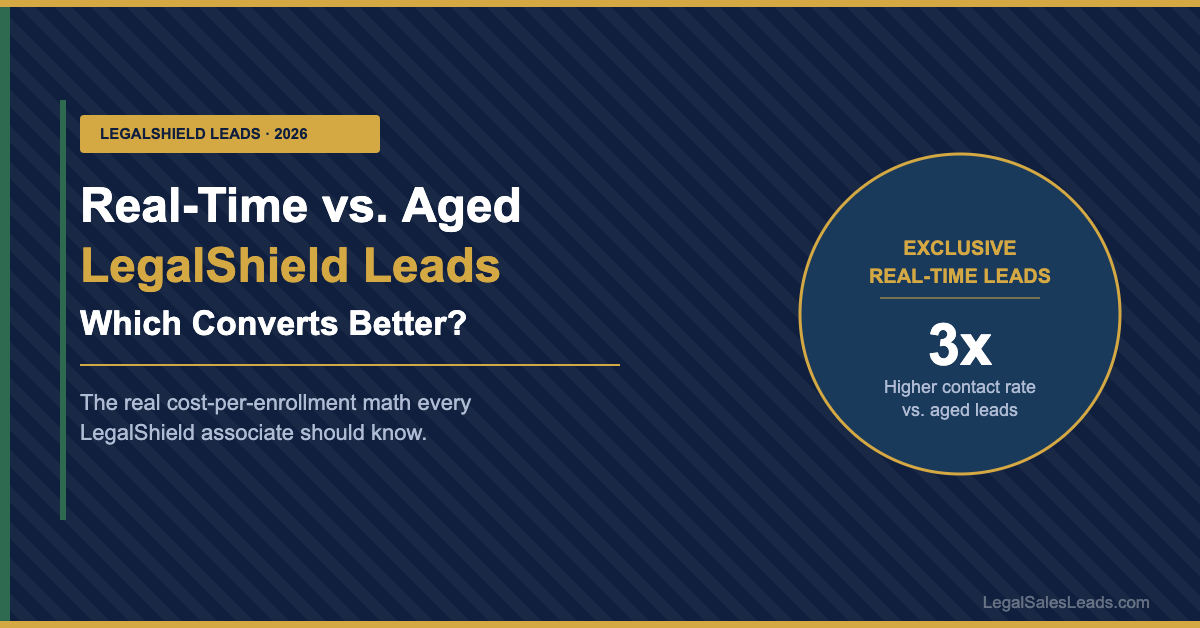
A LegalShield associate has two quotes open in the same browser tab: one vendor promises leads generated in the last 24 hours, the other offers a stack of 90-day-old records for half the price. She has $400 to spend this week and no idea which one actually turns into enrollments.
That choice — real-time vs aged LegalShield leads — comes up for almost every associate building a lead-buying budget, and the honest answer is that both have a place. The mistake most associates make isn’t picking the “wrong” type, it’s not understanding how the age of a lead changes the entire strategy needed to close it. Get the mismatch wrong and even a good script won’t save the call.
What’s the Real Difference Between Real-Time and Aged LegalShield Leads?
A real-time lead is a prospect who filled out a form expressing interest in legal or identity protection coverage within the last few minutes to a few hours. They’re still thinking about the problem that made them search in the first place — a landlord dispute, a will they need drafted, an identity theft scare. An aged lead is the same kind of prospect, but the data is anywhere from a week to several months old, usually resold at a steep discount after the original buyer moved on.
The gap between the two isn’t just price. It’s intent decay. Interest in a legal plan is rarely permanent — people solve the problem another way, forget they filled out the form, or simply lose urgency. Every day that passes between the opt-in and your call chips away at the odds they’ll even remember requesting information.
Why Speed-to-Lead Drives the Real-Time Premium
Industry response-time data consistently shows contact and conversion rates fall sharply after the first hour and keep declining from there. That’s the entire reason real-time leads cost more: you’re paying for a prospect who still remembers why they raised their hand. Aged leads strip that advantage away, which is why they’re priced accordingly.
| Metric | Aged Leads | Real-Time Leads (LegalSalesLeads) |
|---|---|---|
| Typical cost per lead | $1 – $4 | $12 – $25 |
| Contact rate | Low — many disconnected or unresponsive | High — prospect still expects the call |
| Exclusivity | Usually resold to multiple buyers | Sold as exclusive opt-ins |
| Best use case | High-volume dial practice, warm-up calls | Enrollment-focused, ROI-driven campaigns |
| Cost per enrollment (typical) | Often higher despite lower sticker price | Lower once volume needed is factored in |
A $3 aged lead that takes 20 dials to reach one live conversation can cost more per actual conversation than a $20 real-time lead answered on the second ring.
When Aged LegalShield Leads Still Make Sense
Aged leads aren’t worthless — they’re just a different tool. New associates who need reps on the phone before they’re ready to spend real money on premium leads can use aged lists to practice openers, handle objections, and build calling confidence without much financial risk. Aged leads can also work as a supplemental dial list to fill downtime between real-time appointments, since the marginal cost of an extra dial is low.
Where aged leads fall short is anywhere enrollment volume and ROI actually matter — building a full-time income, hitting a monthly production goal, or justifying an ongoing ad spend to your upline. Associates who lean entirely on aged data tend to burn hours chasing cold contacts instead of having conversations with people who still want to talk.
The Hidden Cost of “Cheap” Leads
Time is the cost most associates forget to count. Every hour spent dialing unresponsive aged contacts is an hour not spent talking to someone who opted in this morning. When you factor in your own time at even a modest hourly value, the “cheaper” lead often isn’t cheaper at all.
Key Insight
Real-time, exclusive leads cost more per record but typically produce a lower cost per enrollment — because you’re not splitting the prospect with three other associates or racing intent decay before you even dial.
How to Decide Which Lead Type Fits Your Budget
The right mix depends on where you are in your business, not just what’s cheapest on paper. Ask yourself these questions before you spend another dollar on either type:
- What’s your goal this month? Practice reps favor aged leads; enrollment targets favor real-time.
- How fast can you actually call? If you can’t dial within minutes of delivery, some of the real-time advantage is lost — speed-to-lead matters as much as lead type.
- Is the lead exclusive? Shared aged leads mean you’re one of several associates calling the same person — factor that competition into your close-rate expectations.
- What’s your true cost per enrollment? Track it for both lead types over 30 days before deciding where to put your next budget dollar.
Quick Recap
- Real-time leads — higher cost per lead, but higher contact and close rates because intent hasn’t decayed.
- Aged leads — cheap per record, best for practice dials, not for hitting enrollment goals.
- Cost per enrollment — the only number that tells you which lead type is actually winning.
- Speed-to-lead — call real-time leads within minutes, not hours, to capture the full advantage you paid for.
Stop Splitting Leads With Other Associates
LegalSalesLeads delivers exclusive, real-time opt-in leads straight to LegalShield associates — no aging, no resharing.