
A prospect just spent eleven minutes on the phone telling you about the eviction notice her landlord’s lawyer sent last month. She’s engaged, she’s nodding along, and then she says “let me think about it.” That’s the moment most associates lose a sale they’d already won — because they didn’t know how to close a LegalShield lead on the first call.
If you’re working exclusive, opt-in leads, the first call is not a cold intro — it’s a warm conversation with someone who already raised their hand. Treating it like a cold pitch is the single biggest reason associates let good leads go cold. Below is a first-call framework built specifically around how to close a LegalShield lead on the first call, plus what to do when you can’t.
Why the First Call Is Your Best Shot
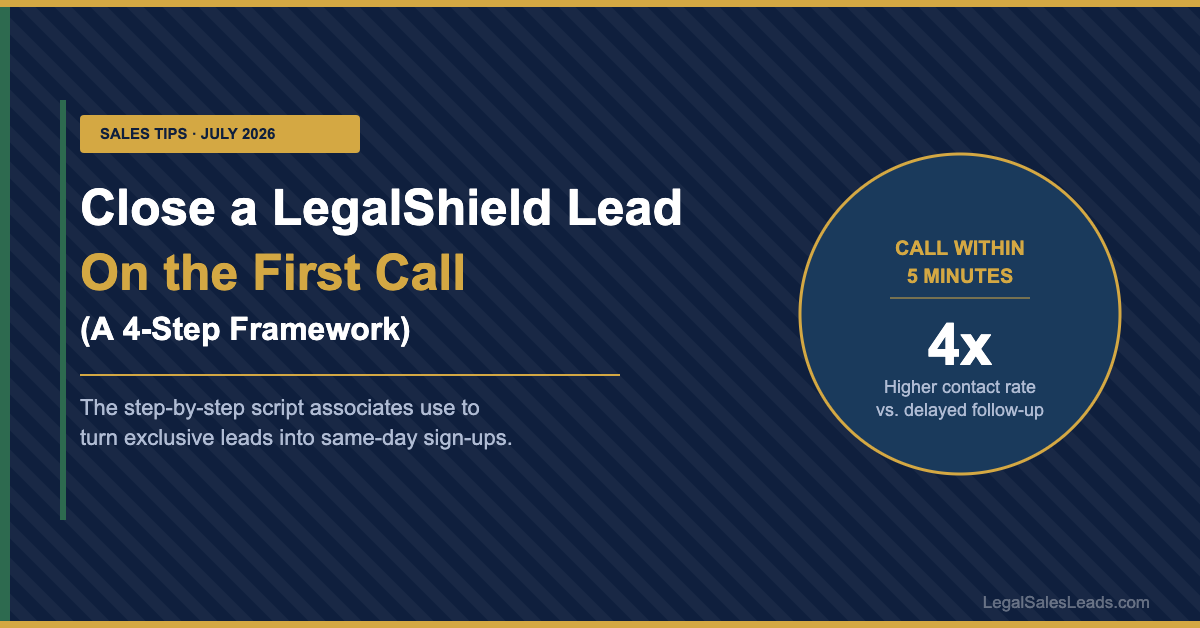
Every hour that passes after a lead opts in, their intent decays. Industry data on inbound leads consistently shows response speed as the top predictor of conversion — call within 5 minutes and you’re several times more likely to reach and convert the prospect than if you wait even an hour. That’s why associates who focus on learning how to close a LegalShield lead on the first call consistently outperform those who treat every lead as a multi-touch nurture project by default.
The reason it works is simple: the person filled out a form because a real problem is active right now — a landlord dispute, a contract they don’t understand, a business they’re trying to protect. On the first call, that urgency is still fresh. By day three, it’s often resolved itself, forgotten, or handled by someone else.
Cold Outreach vs. Working an Opt-In Lead
The approach that works on a cold list will actively hurt you on a warm lead. Here’s the difference in practice:
| Metric | Cold List Call | Exclusive Opt-In Lead |
|---|---|---|
| Opening line | Introduce yourself and the company | Reference the exact problem they submitted |
| Prospect’s mindset | Guarded, unsure why you’re calling | Expecting your call, has a specific need |
| Call goal | Qualify and book a second call | Present the plan and ask for enrollment |
| Typical close rate | Low single digits | Meaningfully higher with same-day contact |
The 4-Step First-Call Framework
This structure is designed for a 10-15 minute call and gets to a decision instead of another callback.
1. Open with their problem, not your pitch
“You mentioned [specific issue] when you requested info — tell me what’s going on with that.” This single line separates the associates who close on the first call from the ones who get “send me some info.” Let them talk for two full minutes before you say anything about LegalShield.
2. Diagnose before you prescribe
Ask one or two follow-up questions that surface urgency: “Has this happened before?” or “What happens if this isn’t resolved in the next few weeks?” You’re not interrogating — you’re letting them hear themselves describe why they need this now.
3. Match the plan to the problem, not the other way around
If they mentioned a business dispute, lead with the commercial plan or CDLP benefits — not a generic overview of every tier LegalShield offers. Specificity signals competence and shortens the call.
4. Ask for enrollment directly
“Based on what you’ve told me, I’d recommend we get you covered today so you can call an attorney about this before it gets worse. Let’s get your membership started right now — it takes about five minutes.” Direct, assumptive language outperforms a soft “let me know if you’re interested” close every time.
Associates who ask for the enrollment directly on the first call close at a noticeably higher rate than those who end the call with “I’ll follow up next week.” Silence after the ask is normal — resist the urge to fill it.
Handling the Three Objections That Kill First-Call Closes
Almost every stalled call comes down to one of three objections. Prepare a response before you dial, not while you’re on the phone.
“I need to talk to my spouse/partner”
Don’t fight it — use it. “Totally understand. Since your issue is time-sensitive, would it help if we got the membership started today so you’re covered while you two finalize things? You can always adjust later.” This reframes enrollment as a safety net, not a commitment they’re rushing.
“I want to think about it”
Ask what specifically they want to think through. Nine times out of ten it’s price or plan fit, not genuine hesitation about the value — and both are solvable on the call.
“Is this like insurance? I’ve been burned before”
Reframe with a concrete example: unlimited attorney phone calls, no per-hour billing, no claims process. Concrete beats abstract every time on this objection.
Key Insight
Objections on a warm, opt-in lead are almost always about logistics, not interest. The prospect already told you they have a problem — your job on the first call is to remove friction, not re-sell the value.
If You Don’t Close Today: The Follow-Up Cadence
Not every first call ends in a signed membership, and that’s fine as long as you have a plan instead of hoping they call you back.
- Same day, 2-4 hours later: A short text summarizing what you discussed and the specific plan you recommended.
- Day 2: A call, not just a text — ask directly if they had a chance to talk with their spouse or review pricing.
- Day 4-5: Share a relevant piece of content (a plan comparison, a short story of how legal plans helped someone in a similar situation).
- Day 7: Final direct call — ask for a yes or no so the lead doesn’t sit in limbo indefinitely.
Leads that go untouched past day seven convert at a fraction of the rate of leads worked on this cadence. A short, defined follow-up sequence beats an open-ended “I’ll circle back” every time.
First-Call Close Checklist
- Call within 5 minutes — response speed drives contact and close rate more than any script.
- Open with their problem — reference what they submitted before you mention LegalShield.
- Match the plan to the need — specificity shortens the call and builds trust.
- Ask for enrollment directly — assumptive language beats a soft close.
- Have a 7-day follow-up cadence ready — for the calls that don’t close on contact.
Great Scripts Still Need Great Leads
A perfect first-call framework can’t fix a shared, recycled, or low-intent lead. Work exclusive, opt-in leads built for associates who want real conversations, not cold rejections.