Best Places to Buy LegalShield Leads in 2026 (And What to Avoid)

Best Places to Buy LegalShield Leads in 2026 (And What to Avoid)

A LegalShield associate in Ohio spent $600 on a “lead package” from a generic marketing broker last spring. Forty-two leads, three appointments, zero enrollments — and half the numbers were disconnected. That’s the story that pushes most associates to start asking where the best places to buy LegalShield leads actually are, instead of just buying whatever shows up first in a Google ad.

Not all lead sources are built the same, and for LegalShield associates the difference between a good source and a bad one usually comes down to three things: exclusivity, opt-in quality, and how recently the lead expressed interest. This post breaks down what separates the best places to buy LegalShield leads from the ones that quietly drain your ad budget and your confidence.


Why the Source of Your Leads Matters More Than the Price

It’s tempting to shop for LegalShield leads the way you’d shop for office supplies — cheapest price per unit wins. That logic falls apart fast in lead generation. A $10 lead that was scraped from an old data list and resold to five other associates is worth less than nothing; you’ll burn call time chasing someone who already hung up on three other reps that week.

The best places to buy LegalShield leads share a common trait: the person on the other end of the phone actually filled out a form asking about legal or identity theft protection — recently, and specifically. That’s the difference between a “lead” and a name on a spreadsheet.

Associates working exclusive, opt-in leads within 24 hours of the request typically report contact rates 2–3x higher than those working shared or aged lists from generic brokers.

Exclusive vs. Shared: What Actually Changes Your Close Rate

Most low-cost lead brokers sell the same name to three, five, sometimes eight agents at once. By the time you call, the prospect has already heard the same pitch twice and is annoyed, not curious. Exclusive leads flip that dynamic — you’re the only associate calling, which means the conversation starts from curiosity instead of fatigue.

What “Opt-In” Should Actually Mean

A real opt-in lead comes from someone who saw a specific offer about legal plans or identity theft protection and chose to submit their contact information for it. That’s different from a lead pulled from a general “insurance” or “financial services” form where LegalShield was one of a dozen checkboxes buried at the bottom.

Metric Generic Broker / Shared List LegalSalesLeads.com
Exclusivity Sold to 3–8 agents Sold to you only
Opt-in specificity General insurance/finance forms LegalShield-specific interest
Lead age at delivery Days to weeks old Real-time delivery
Filtering options None or limited State, plan interest, budget
Replacement policy Rarely offered Bad numbers replaced

Red Flags When Shopping for LegalShield Leads

Before you buy from any source, run it through a quick gut check. A few warning signs tend to predict a bad batch before you’ve dialed a single number.

  • No mention of exclusivity. If the seller won’t say whether a lead is sold once or multiple times, assume it’s shared.
  • Bulk pricing with no filters. “1,000 leads for $200” with no state or interest filtering usually means a recycled data dump.
  • No replacement guarantee. Legitimate lead providers will swap out disconnected numbers or invalid contacts.
  • Vague sourcing. If they can’t explain where the opt-in happened, you can’t trust what the prospect actually agreed to.

Questions to Ask Before You Buy

Ask directly: Is this lead exclusive to me? How old is it when I receive it? What did the person actually opt in for? Can I filter by state or plan type? What happens if a number is bad? A source that answers all five clearly is worth paying more for than one that dodges them.

Key Insight

Price per lead is the wrong number to optimize. Cost per enrollment — factoring in exclusivity, opt-in quality, and speed to contact — is what actually determines whether a lead source is worth your budget.

How to Work a Lead Once You’ve Bought It

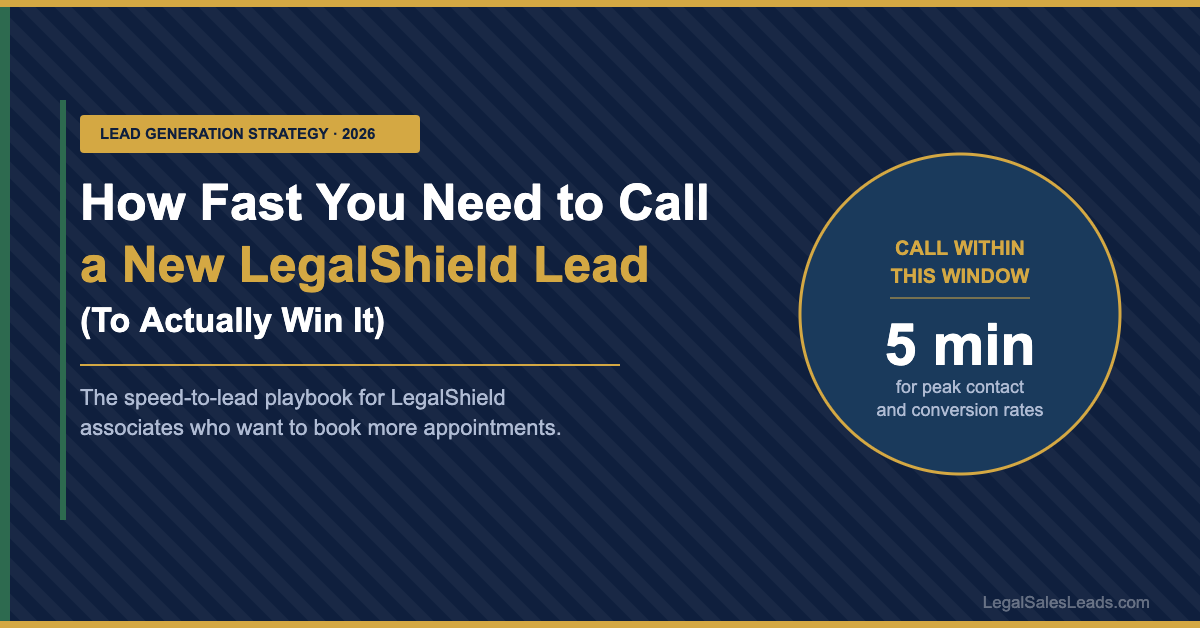
Even the best places to buy LegalShield leads won’t save a slow follow-up. Call within the first 5 minutes when possible — response rates fall sharply after the first hour. Have your opener ready before you dial: reference the specific offer they responded to, not a generic “hi, got a minute” script. And build a follow-up cadence for the ones who don’t answer on the first call, since most enrollments come from the second or third touch, not the first.

What to Look For Before You Buy

  1. Exclusivity — the lead should be sold to you and no one else.
  2. True opt-in — the person specifically requested LegalShield information.
  3. Fresh delivery — leads should reach you in real time, not days later.
  4. Filtering — the ability to target by state, plan interest, or budget.
  5. A replacement policy — protection when a number turns out to be bad.

Stop Splitting Leads With Other Associates

See exclusive, opt-in LegalShield leads filtered by state and plan interest — delivered in real time.

View Lead Packages

The 3-Call Follow-Up Sequence That Turns Cold LegalShield Leads Into Enrollments

The 3-Call Follow-Up Sequence That Turns Cold LegalShield Leads Into Enrollments

A LegalShield associate calls a fresh lead once, gets voicemail, and moves on. Three weeks later that same person signs up with someone else — because that associate followed up.

If you’re only calling a lead once or twice before writing it off, you’re leaving enrollments on the table. Most buying decisions for a LegalShield or IDShield membership don’t happen on the first touch — they happen after the prospect has heard from you enough times to trust that you’re not going anywhere. A structured legalshield lead follow-up sequence is the difference between a lead that goes cold and one that converts.

This isn’t about calling more — it’s about calling with a plan. Below is a 3-call sequence, with scripts and timing, that consistently outperforms the “call once and hope” approach most new associates default to.


Why Most LegalShield Leads Die After Call One

A lead that opted in for information on legal or identity theft protection isn’t a “no” just because they didn’t answer. Life gets in the way — they’re at work, the number looks unfamiliar, or they simply need to hear from you twice before it registers as real. The problem is that most associates treat a missed first call as a dead end instead of the start of a legalshield lead follow-up sequence.

Industry follow-up data across insurance and membership sales consistently shows that a majority of eventual sales come after the third contact or later — not the first. If your process stops at attempt one or two, you are, statistically, quitting before the deal was ever going to close.

A lead that doesn’t answer on call one isn’t cold. It’s untouched. Treat it that way and your close rate changes.

The 3-Call Sequence

Call 1 — Same Day, Within 5 Minutes

Speed matters more than script polish here. A lead contacted within five minutes of opting in is far more likely to answer than one contacted an hour later. Keep the opener simple: confirm what they were looking into, ask one qualifying question, and set the expectation that you’ll follow up if you don’t connect. Don’t pitch yet — you’re establishing that a real person is on the other end.

Call 2 — Day 2, Different Time of Day

If call one went to voicemail, leave a short message and text a follow-up the same day. Call again the next day at a different time than your first attempt — if you called morning, try afternoon or early evening. This single variable, changing the time window, recovers a meaningful share of leads who simply weren’t reachable at your original call time.

Call 3 — Day 5, With a Value-Add Reason to Call

By the third attempt, don’t just call to check in — give them a reason. Reference a specific benefit tied to what they originally inquired about (identity monitoring, will preparation, traffic ticket coverage) so the call feels like new information, not a repeat pitch. This is also the point where email or text with a short explainer video or plan comparison performs well alongside the call.


Generic Follow-Up vs. the Structured Sequence

The table below shows why associates who follow a defined cadence consistently out-enroll those who call whenever they remember to.

Metric Generic Follow-Up 3-Call Sequence
Contact attempts 1–2, no set timing 3+, scheduled and varied
Speed to first call Same day, unspecified Within 5 minutes
Message on no answer Rarely left Voicemail + text same day
Final touch content Repeat of first pitch New, specific value-add

What Actually Makes This Sequence Work

None of this works if the leads behind it were cold or shared to begin with. A follow-up sequence built on a stale, resold list will underperform no matter how well-timed your calls are — the prospect has likely already heard from three other associates and stopped answering unknown numbers altogether. The sequence performs best on exclusive, recently opted-in leads who haven’t been worked to exhaustion before you ever dial.

  • Call fast. The first five minutes matter more than any script.
  • Vary your timing. A second call at a different hour recovers leads the first attempt missed.
  • Always leave something. Voicemail or text after every missed call keeps you top of mind.
  • Make call three different. New information, not a repeated pitch, is what re-engages a quiet lead.
  • Start with a clean lead. Exclusive leads answer more calls than shared or aged ones.

Key Insight

A follow-up sequence is only as strong as the lead behind it. Structure recovers leads that are reachable — it can’t recover a list that’s already been called by five other associates.

Quick Recap

  1. Call within 5 minutes — speed beats script every time.
  2. Follow up day 2 — at a different time than your first attempt.
  3. Close the loop by day 5 — with new, specific value, not a repeat pitch.
  4. Work exclusive leads — the sequence only pays off on leads that haven’t been shopped around.

Your Sequence Is Only as Good as Your Leads

Stop running a great follow-up process on tired, shared leads. Get exclusive, opt-in LegalShield leads built for associates who actually work the follow-up.

View Lead Packages

Where to Buy LegalShield Leads: A 2026 Buyer’s Guide for Associates

Where to Buy LegalShield Leads: A 2026 Buyer’s Guide for Associates

An associate we talked to last month paid $380 for a spreadsheet of 200 “leads” from a data broker. She dialed for three days straight and booked zero appointments — the list had already been sold to nine other agents before she ever saw it.

If you’re wondering where to buy LegalShield leads that actually turn into signed memberships, the honest answer is: not all lead sources are built the same way, and the cheapest option is almost always the most expensive one once you count your wasted call hours. This guide breaks down the real options associates have in 2026, what separates a lead worth paying for from one that wastes your afternoon, and how to vet any source before you hand over a card number.


Where to Buy LegalShield Leads: The Three Real Options

Most associates end up choosing between three paths when they decide it’s time to stop relying only on warm-market referrals.

1. Data Broker Lists

These are bulk contact exports — often scraped or purchased from general consumer databases — sold cheaply per thousand records. The person on the other end never asked about LegalShield, never opted into anything, and has usually been called by several other associates or unrelated businesses using the same file. Response rates on cold, non-opt-in lists typically run well under 2%.

2. Running Your Own Ads

Associates with marketing budget and time sometimes run their own Facebook or Google ads targeting people searching for legal or identity theft protection. This can work, but it requires ad account setup, creative testing, landing pages, and ongoing spend management — a part-time job on top of selling. Most associates who try this burn $500–$1,000 learning what already-built lead systems figured out years ago.

3. Exclusive Opt-In Lead Services

This is where a service like LegalSalesLeads.com fits in: leads generated specifically from people who searched for or requested information about LegalShield-type coverage, delivered to one associate only, in real time. No data broker resale, no ad management on your end — just prospects who already raised their hand.


What Separates a Lead Worth Buying From One You’ll Regret

Price per lead is the number every associate looks at first, and it’s the wrong number to lead with. What actually determines whether a lead turns into a signed member is exclusivity, intent, and freshness.

Metric Data Broker List Exclusive Opt-In Leads (LegalSalesLeads)
Exclusivity Sold to 5–10+ agents Sold to you only
Prospect intent None — cold contact info Requested info on coverage
Delivery speed Batch file, often days old Real-time delivery
Typical contact rate Under 2% 5x higher on average

A $3 shared lead that never answers costs you more in dialing time than a $25 exclusive lead who picks up on the first ring. Cost per lead is the wrong metric — cost per signed member is the one that matters.


Red Flags to Watch Before You Pay for a Lead List

Before you buy LegalShield leads from any source, run it through a quick gut check. A few warning signs should make you walk away immediately.

  • No mention of exclusivity. If the seller won’t confirm in writing that a lead is sold once, assume it’s shared.
  • Vague sourcing. “Verified consumer database” is not the same as “opted in specifically for legal or identity protection information.”
  • Bulk pricing with no filters. Leads with no age, income, or geography filtering are built for volume, not fit.
  • No replacement policy. Reputable sources will replace bad numbers or disconnected contacts — brokers dumping static files usually won’t.

How to Vet a Lead Source in 10 Minutes

You don’t need a background check to sort a legitimate lead provider from a broker dumping old data. Ask three questions before you buy: How many times is this lead sold? How was it generated — ad opt-in, cold scrape, or partner referral? And how fast after the prospect raises their hand does it land in my inbox?

Key Insight

If a provider can’t answer all three questions clearly and quickly, that hesitation is your answer. The best lead sources are proud to explain exactly where their leads come from — because that’s what makes the leads worth buying.

What to Remember Before You Buy

  1. Exclusivity beats price — a lead sold once outperforms a cheap lead sold ten times.
  2. Intent matters more than volume — opt-in prospects convert far better than cold contact data.
  3. Speed of delivery drives contact rate — real-time leads beat batch files every time.
  4. Ask before you pay — a provider unwilling to explain sourcing is a provider to avoid.

Ready to Buy Leads That Actually Answer the Phone?

LegalSalesLeads.com delivers exclusive, opt-in LegalShield leads in real time — never shared, never resold.

View Lead Packages

Speed to Lead: How Fast You Need to Call a New LegalShield Lead to Win It

Speed to Lead: How Fast You Need to Call a New LegalShield Lead to Win It

Two associates buy the same batch of leads at 9 a.m. One calls at 9:04. The other clears email first and calls at 10:20. By noon, the first associate has three appointments booked. The second is still leaving voicemails.

That gap isn’t luck, and it isn’t script quality. It’s speed to lead — the time between when a prospect submits their information and when an associate actually reaches them. Every LegalShield associate has heard “follow up fast,” but few know the actual numbers behind why it matters, or how to build a routine around it. This post breaks down how fast is fast enough, what happens to your contact rate as minutes tick by, and how to build a speed-to-lead habit that doesn’t burn you out.


Why Speed to Lead Determines Whether You Even Get a Conversation

A new LegalShield lead is not a name sitting in a spreadsheet waiting patiently for you. It’s someone who, minutes ago, typed their number into a form because they had a legal worry — a landlord issue, a contract question, a family matter — on their mind right then. That window of urgency closes fast. If you’re not the first call they get, you’re competing with whatever else grabbed their attention: a text from a friend, another ad, or simply forgetting why they filled out the form in the first place.

Speed to lead isn’t about looking eager. It’s about catching the prospect while the problem that made them fill out the form is still top of mind. The first associate to reach a lead with genuine urgency in their voice usually wins the appointment — not because they out-sold anyone, but because they were the only one who showed up while it still mattered.

How Fast Is Fast Enough?

There’s no single magic number, but the pattern is consistent across lead-based sales: contact rates fall off sharply after the first few minutes and keep falling the longer you wait. A lead you call within five minutes behaves like a warm introduction. A lead you call the next morning behaves like a cold call — except now they’re mildly annoyed you took so long.

Time to First Call Typical Contact Rate What It Feels Like to the Prospect
Under 5 minutes Highest “That was fast — they must actually want my business.”
30 minutes Noticeably lower “Oh right, I filled that out. Who is this again?”
Same day, hours later Low Voicemail. They’ve likely moved on or gotten another call.
Next day or later Lowest Treated as a cold call, or ignored entirely.

If you only change one habit this month, make it this: check for new leads on a fixed schedule — not “whenever I get to it” — and call before you do anything else with them.

Building a Speed-to-Lead Routine That Doesn’t Wreck Your Day

Being fast doesn’t mean being glued to your phone. It means removing the friction between “lead arrives” and “phone rings.”

Set Notification Triggers, Not Manual Checks

Turn on push or text notifications for new lead deliveries so you’re not refreshing a dashboard. The goal is to know within a minute or two of a lead landing, not the next time you happen to open your email.

Protect Call Windows on Your Calendar

If you can’t drop everything the instant a lead arrives, block two or three short windows in your day — mid-morning, early afternoon, early evening — where your only job is calling anything that came in since the last window. This keeps your worst-case response time under an hour instead of under a day.

Have Your Opener Ready Before You Dial

Speed only helps if the call itself doesn’t waste the urgency you just captured. Know your first line before you dial — referencing the specific reason they reached out (“I saw you had a question about a rental agreement”) — instead of a generic “hi, got a minute to talk about legal plans?”

Key Insight

Exclusive, opt-in leads make speed worth the effort. If a lead has already been sold to three other associates, being fast just means you’re first in line to hear “someone already called me.” Working exclusive leads protects the value of every minute you save.

What to Do When You Can’t Call Immediately

Nobody hits five minutes every time. When a call has to wait, send a short text right away instead — something like “Hi, this is [name] with LegalShield, got your info about [topic], will call shortly.” It costs 20 seconds, keeps you top of mind, and often gets a reply before you even dial.

  • Text first if you can’t call fast. A quick text preserves the relationship until you can talk live.
  • Never let a lead sit past 24 hours untouched. Even a delayed call beats no call — but treat it as damage control, not standard practice.
  • Batch-check on a schedule you can actually keep. Consistency beats sporadic bursts of speed.

Speed-to-Lead Checklist

  1. Turn on instant lead notifications — don’t rely on manually checking a dashboard.
  2. Aim for contact within 5 minutes whenever you’re available.
  3. Block dedicated call windows to catch anything you miss in real time.
  4. Text immediately if you can’t call to hold the prospect’s attention.
  5. Work exclusive, opt-in leads so your speed isn’t wasted on a shared list.

Speed Only Pays Off With the Right Leads

Get exclusive, opt-in LegalShield leads delivered in real time — so every fast call reaches someone who hasn’t already heard your pitch from three other associates.

View Lead Packages

How to Prioritize LegalShield Leads for Maximum ROI: A Filter-First Call Strategy

How to Prioritize LegalShield Leads for Maximum ROI: A Filter-First Call Strategy

Marcus had 40 fresh leads sitting in his dashboard on a Monday morning. He dialed them top to bottom, in the order they loaded — and by Thursday he’d booked exactly two appointments. His teammate worked the same batch size that week, but she sorted first. She booked eleven.

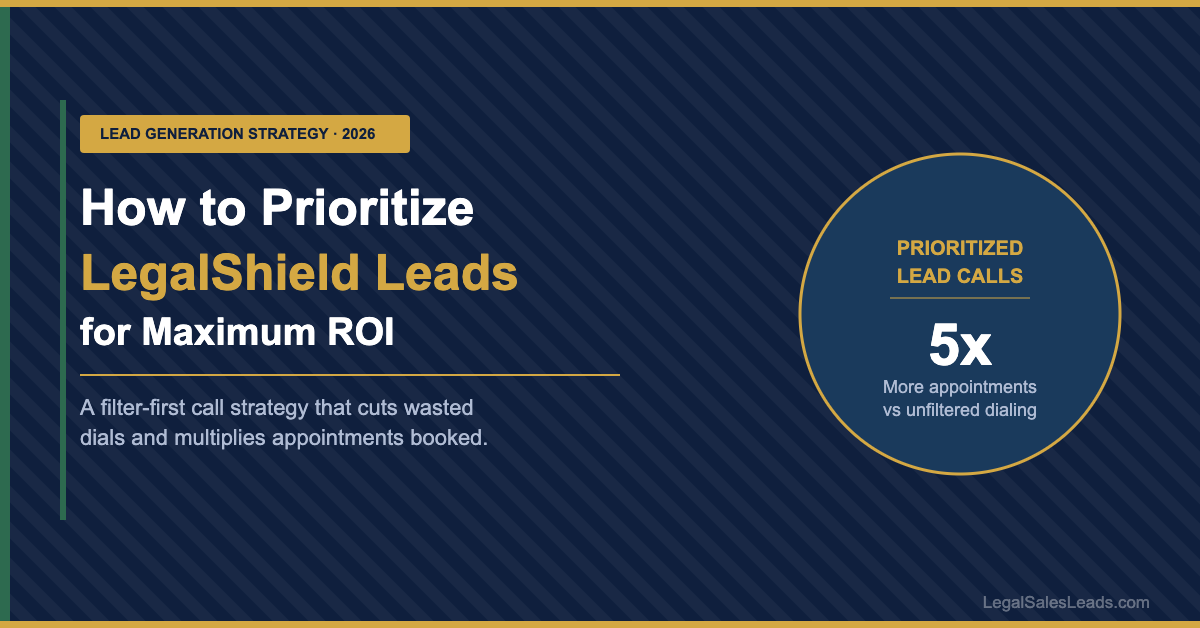
The difference wasn’t effort or script quality. It was that Marcus treated every lead the same, while his teammate prioritized LegalShield leads for maximum ROI before she ever picked up the phone. If you’re generating or buying leads and calling them in whatever order they arrive, you’re leaving signed memberships on the table — not because the leads are bad, but because your calling order is random.


Why Most Associates Waste Their Best Leads

Every lead list has a small number of leads that are ready to buy today and a much larger number that need nurturing over weeks. The problem is that both types look identical in a spreadsheet — same name, same phone number, same opt-in checkbox. Without a system to prioritize LegalShield leads for maximum ROI, associates default to calling in list order, which means the hottest leads sit uncalled for hours while cold ones get dialed first.

Lead decay is the real cost here. Response rates on a fresh opt-in lead drop by roughly half for every 30 minutes that pass without contact, and by the next day, most of that initial buying intent has evaporated. A prioritization system exists to make sure your first ten calls of the day are the ten leads most likely to convert — not just the ten that happened to sync first.

The Three Filters That Actually Predict Conversion

You don’t need complicated software to prioritize a lead list. You need three filters, applied in order, every time a new batch lands.

Filter 1: Time Since Opt-In

Anything under 15 minutes old goes to the top of your list, no exceptions. This is the single highest-leverage filter available to you, and it costs nothing to apply — just sort by timestamp before you sort by anything else.

Filter 2: Source Quality

Not all leads convert at the same rate even when they’re equally fresh. Exclusive, opt-in leads generated specifically for LegalShield plans outperform shared or recycled lists because the person filled out a form knowing what they were asking about. Tag your leads by source and weight exclusive leads above anything shared with other associates.

Filter 3: Stated Intent Signals

Form fields like “interested in business plan,” “family size,” or “best time to call” are gold. A lead who specified a callback window and a plan type is telling you exactly how to open the conversation. Move these to the front regardless of how fresh they are.

Associates who call leads within 15 minutes of opt-in report contact rates two to three times higher than those who call the same leads a day later.

Building a Lead Scoring System You Can Run in 10 Minutes a Day

You don’t need a CRM to score leads — a simple tag or column works. Assign each incoming lead a score from 1 to 3 based on the filters above: a 3 is fresh, exclusive, and has an intent signal; a 2 has two of the three; a 1 has only one. Call every 3 before you touch a 2, and every 2 before a 1. Revisit the list every hour, because a lead’s score changes as it ages.

Metric Unfiltered Call List Prioritized List (LegalSalesLeads)
Avg. contact rate 15-20% 35-45%
Time to first dial Hours, no priority Under 15 minutes
Wasted dials on dead leads High Low
Appointments per 40 leads 2-4 8-12

The ROI Math: What Prioritization Is Actually Worth

If a 40-lead batch produces two appointments unfiltered versus ten appointments prioritized, you’ve multiplied your return on that same lead spend by five times without buying a single additional lead. The leads didn’t get better — your order of operations did. This is why lead generation strategy matters as much as lead quality itself: the best list in the world underperforms if it’s worked out of order.

Key Insight

Prioritization is free. It costs zero dollars in ad spend and takes minutes to build, yet it’s often the single biggest lever an associate can pull to improve ROI on leads they’ve already paid for.

Sourcing matters too. Exclusive, opt-in leads built specifically for LegalShield associates give your scoring system better raw material to work with — a filter can only surface what’s actually there. Combining a strong source with a disciplined filter is how top producers consistently outwork associates dialing three times as many names.

How to Prioritize Your Next Lead Batch

  1. Sort by time since opt-in — call anything under 15 minutes old first.
  2. Tag by source quality — weight exclusive leads above shared lists.
  3. Flag intent signals — move stated plan interest and callback windows to the top.
  4. Score every lead 1-3 — work 3s first, revisit hourly as scores decay.
  5. Track appointments per batch — measure ROI, not just dials made.

Start With Leads Worth Prioritizing

A scoring system only works as well as the leads feeding it. Get exclusive, opt-in LegalShield leads built for associates who want ROI, not just volume.

View Lead Packages

The LegalShield CDLP Plan Explained: What Associates Need to Know

The LegalShield CDLP Plan Explained: What Associates Need to Know

A prospect mentions he drives a rig for a regional freight company, and the call almost ends there — until the associate remembers LegalShield has a plan built exactly for him. That’s the moment the LegalShield CDLP plan stops being a line item and starts being the reason the sale closes.

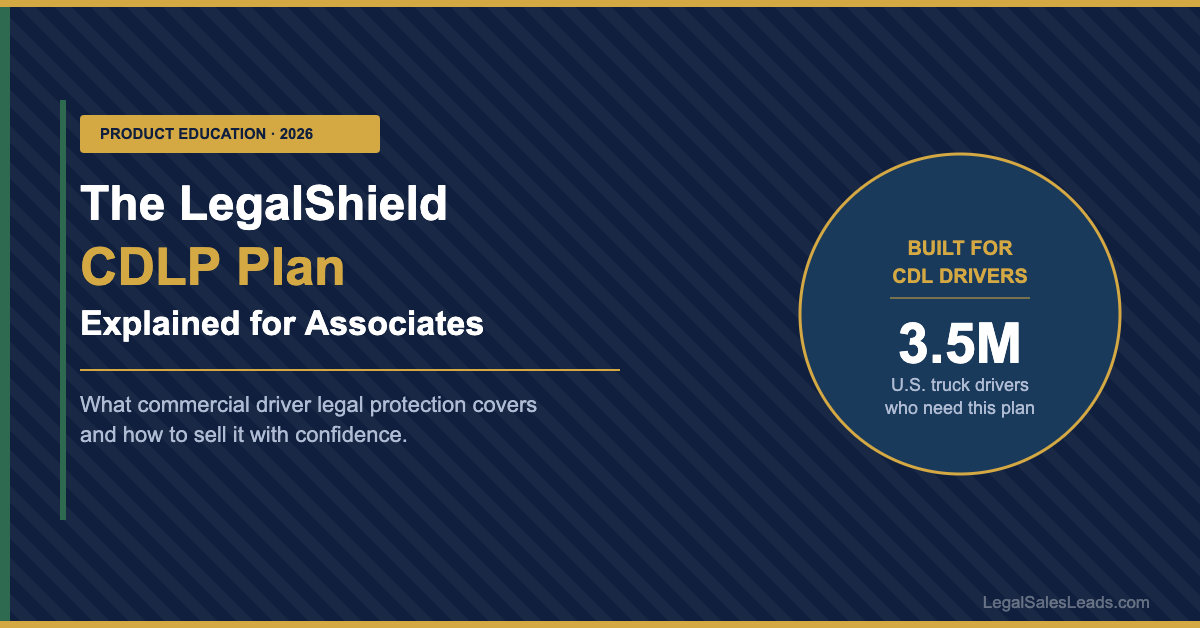
The LegalShield CDLP plan — short for Commercial Driver Legal Plan — is one of the most underused tools in an associate’s kit, mostly because reps don’t fully understand what it covers or who needs it. That’s a missed opportunity: there are more than 3.5 million truck drivers in the U.S. alone, and nearly all of them face a legal risk most personal plans were never designed to handle — moving violations, DOT citations, and CDL-specific hearings that can end a career overnight.

This guide breaks down what the LegalShield CDLP plan actually covers, how it differs from the standard personal legal plan, and how to position it so commercial drivers understand why it’s not optional — it’s protection for their livelihood.


What Is the LegalShield CDLP Plan?

The LegalShield CDLP plan is a specialized legal membership designed for commercial drivers — truckers, bus operators, and anyone whose income depends on holding a valid Commercial Driver’s License. Unlike the standard personal plan, which focuses on everyday legal needs like contracts, wills, and general consultations, the CDLP plan is built around the specific legal exposure that comes with driving for a living: traffic citations, DOT compliance issues, license points, and the hearings that can follow.

Who Needs a Commercial Driver Legal Plan

Any prospect who holds a CDL is a candidate — owner-operators, company drivers, delivery fleet employees, and even drivers in training. For this group, a single unresolved citation isn’t a $150 fine; it’s a potential loss of the license that pays their mortgage. That’s the framing that makes the LegalShield CDLP plan sell itself once a prospect understands it.


CDLP Plan vs. the Standard Personal Plan

Associates often default to pitching the standard personal plan because it’s the one they know best. But for a commercial driver, the coverage gap is significant. Here’s how the two compare on the issues that matter most to a CDL holder:

Coverage Area Standard Personal Plan CDLP Plan
Moving violation defense Limited, general traffic help Built specifically for CDL violations
DOT citation support Not included Included
License hearing representation Case-by-case, added cost Core benefit of the plan
Employment-related legal issues General employment consultation Tailored to driver employment disputes
Best fit for General consumers, families CDL holders, owner-operators, fleet drivers

A single serious moving violation can trigger a CDL suspension review. For a driver whose entire income depends on that license, the CDLP plan isn’t an upsell — it’s the plan that actually matches their risk.


How to Position the CDLP Plan on a Sales Call

Don’t lead with plan mechanics — lead with the driver’s biggest fear: losing the license that pays the bills. Ask what happens to their household if they’re parked for 30, 60, or 90 days waiting on a hearing. Once that risk is named out loud, walking through the LegalShield CDLP plan becomes a solution conversation instead of a features pitch.

Key Insight

Commercial drivers rarely shop on price the way personal-plan prospects do — they shop on relevance. A rep who can speak fluently about CDL points, DOT hearings, and log violations earns trust faster than one reciting a generic benefits sheet.

Common Objections and How to Answer Them

  • “My company handles that.” Most carriers cover accidents involving company equipment — not personal citations, license hearings, or DOT compliance issues tied to the driver individually.
  • “I’ve never had a ticket.” The CDLP plan isn’t priced against past history — it’s protection against the one incident that could take months of income away.
  • “Isn’t this the same as my regular plan?” Walk them through the comparison table above — the coverage gap on DOT and license-hearing support is the differentiator.

CDLP Plan: What Associates Should Remember

  1. It’s built for CDL holders — owner-operators, company drivers, and fleet employees are the target audience.
  2. The coverage gap is real — standard personal plans don’t address DOT citations or license hearings the way the CDLP plan does.
  3. Lead with the risk, not the plan — frame the conversation around income loss from a suspended license before walking through benefits.
  4. Objections usually come from confusion, not price resistance — most drivers assume their employer already covers this.
  5. The best CDLP prospects come from targeted leads — general consumer leads rarely convert as well as leads pre-filtered for commercial drivers.

Want Leads That Actually Fit the CDLP Plan?

Generic lead lists waste time on prospects who don’t need this plan. Get exclusive, filterable LegalShield leads built for the associates who sell it.

View Lead Packages

IDShield Identity Theft Protection: What It Covers and How to Sell It Fast

IDShield Identity Theft Protection: What It Covers and How to Sell It Fast

Your prospect just got a fraud alert text from their bank at 9pm — by the time you call them back the next morning, they’re primed to buy. That’s the exact moment IDShield identity theft protection sells itself, if you know how to explain it.

Most associates can recite the LegalShield pitch in their sleep, but IDShield identity theft protection gets glossed over as an add-on instead of the standalone close it actually is. Prospects already understand they’re at risk — data breaches make headlines every month — but they don’t know what real protection looks like versus the free credit alerts their bank already sends them. That gap is where you make the sale.


What Is IDShield Identity Theft Protection, Really?

IDShield is LegalShield’s identity monitoring and restoration plan. It watches for misuse of a member’s personal information across credit files, the dark web, court records, social media, and financial accounts, and — this is the part that closes deals — it pairs that monitoring with a licensed private investigator who does the actual restoration work if something goes wrong. That’s the single biggest differentiator from the free tools your prospects already have.

Free bank alerts tell someone their identity was stolen. IDShield fixes it. Leading with that distinction is the fastest way to move a lukewarm lead into a signed member.

Individual vs. Family Coverage

IDShield offers both individual and family plans, and the family tier covers minors — a detail worth surfacing early, since child identity theft often goes undetected for years because kids don’t check their credit. Parents who hear that stat almost always ask follow-up questions, which is your opening to walk through enrollment.


What’s Actually Included in the Plan

When a prospect asks “what am I paying for,” give them specifics, not marketing language. The plan includes:

  • Credit and identity monitoring. Continuous scanning of credit files, bank and retail accounts, and public records for suspicious activity.
  • Dark web and social media monitoring. Alerts if personal data or account credentials show up in breach dumps or on impersonation accounts.
  • Licensed investigator-led restoration. A dedicated investigator handles the paperwork, calls, and disputes if identity theft occurs — the member doesn’t do it alone.
  • Reimbursement coverage. Financial protection for costs tied directly to restoring a stolen identity.

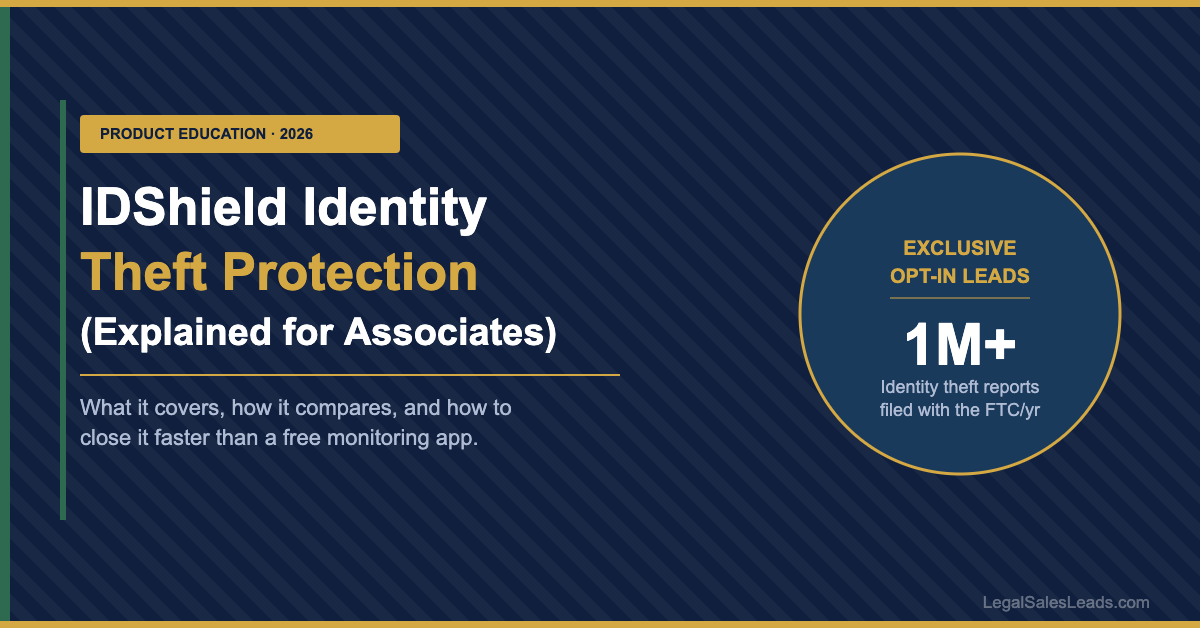
Identity theft reports to the FTC have topped 1 million cases annually in recent years — and restoration without professional help commonly takes prospects well over 100 hours. That’s the pain point IDShield identity theft protection is built to remove.


IDShield vs. Free Monitoring Apps

Prospects will almost always mention a free app or bank alert as a reason to hesitate. Use this comparison to reframe the conversation around outcomes, not just alerts.

Feature Free Monitoring App IDShield
Monitoring scope Credit file only Credit, dark web, social, court records
Who fixes the problem The member, alone Licensed investigator
Family / minor coverage Rarely included Available on family plans
Financial reimbursement Not included Included

How to Position IDShield on a Sales Call

Don’t open with features — open with a question that surfaces the gap in what they already have.

The Three-Question Opener

Ask: “If your identity were stolen tomorrow, who would actually fix it? How many hours could you spend on hold with credit bureaus? And who’s watching your kids’ identities right now?” Most prospects have no answer, which is exactly the opening IDShield identity theft protection is designed to fill. Let the silence do the selling before you jump into plan details.

Key Insight

Leads who’ve recently experienced a breach notification, fraud alert, or lost wallet convert on IDShield significantly faster than cold prospects — because the pain is already top of mind. Filtering for recency of concern beats filtering for demographics alone.


Why IDShield Leads Convert Faster Than Cold Prospects

Cold outreach forces you to build urgency from scratch. A prospect who opted in after searching for identity protection already has it — your job is to translate that urgency into IDShield identity theft protection specifics instead of generic reassurance. That’s why associates working pre-qualified, opt-in leads consistently close identity protection plans faster than those working purchased contact lists or referrals with no expressed interest.

Quick Recap

  1. Lead with restoration, not monitoring — a licensed investigator is the real differentiator over free apps.
  2. Use the three-question opener to surface the coverage gap before pitching features.
  3. Highlight family/minor coverage for prospects with kids — it’s an underused hook.
  4. Prioritize opt-in, high-intent leads over cold lists for identity protection closes.

Ready to Work Warmer Leads?

Get exclusive, opt-in LegalShield and IDShield leads built for associates who want faster closes, not more cold calls.

View Lead Packages

The LegalShield Small Business Plan Explained: A Sales Script for Associates

The LegalShield Small Business Plan Explained: A Sales Script for Associates

A contractor lead tells you he “doesn’t need a lawyer, he’s never been sued.” Ten minutes later he mentions a client who’s refusing to pay a $6,000 invoice over a contract he wrote himself on a napkin. That’s the moment the LegalShield Small Business Plan sells itself — if you know how to explain it.

Most associates can pitch the personal legal plan in their sleep. The LegalShield Small Business Plan is a different conversation — the buyer is thinking about cash flow, liability, and contracts, not speeding tickets and wills. If you’re working leads who own a business, side hustle, or LLC, understanding this plan cold is the difference between a 10-minute close and a prospect who says “let me think about it” and never calls back.


What the LegalShield Small Business Plan Actually Covers

The LegalShield Small Business Plan gives owners access to a dedicated provider law firm for the everyday legal work that businesses generate constantly: contract review, collections letters, employment questions, and consultations on business decisions before they turn into disputes. It is not a substitute for litigation coverage — it’s designed to catch problems before they become expensive ones.

Core Legal Services Included

Depending on plan tier, business owners get unlimited attorney consultations on new legal matters, contract and document review (leases, vendor agreements, client contracts), debt collection letters sent on law firm letterhead, and a discounted hourly rate for services beyond the plan’s scope, like litigation or formation work. For a solo contractor or a five-person LLC, that collections letter alone often pays for a year of membership the first time it’s used.

A demand letter from a law firm resolves unpaid invoices far more often than a follow-up email from the business owner — and most small businesses have no fast, affordable way to send one without this plan.

Who the LegalShield Small Business Plan Is Built For

This plan isn’t a generic pitch for anyone with an LLC. It converts best with prospects who sign contracts, hire people, or deal with customer disputes as part of daily operations. That includes contractors and tradespeople, independent consultants, ecommerce sellers, restaurant and salon owners, and property managers or landlords with a handful of units. If a lead’s business touches any of those categories, the small business plan is a stronger fit than the personal plan alone.

Red Flags That Signal a Strong Fit

Listen for specific pain points during discovery calls: mentions of a client who hasn’t paid, a vendor contract they signed without reading closely, an employee dispute, or hesitation about firing someone because they’re “worried about getting sued.” Each of those is a direct entry point into explaining what the plan solves.


LegalShield Small Business Plan vs. Hiring a Traditional Business Attorney

The comparison prospects make in their head is “plan vs. no lawyer at all.” The comparison that actually closes deals is “plan vs. paying an attorney by the hour every time something comes up.”

Metric Hourly Business Attorney LegalShield Small Business Plan
Typical cost per contract review $150–$400 Included in monthly membership
Response time for questions Days, often billed for the call itself Same or next business day, unlimited
Collections/demand letters Billed separately, $200+ Included
Monthly cost predictability Unpredictable, invoice-based Flat monthly rate

How to Position the Small Business Plan on a Sales Call

Don’t open with “legal insurance” language — business owners tune it out because it sounds like something they’ll never use. Open with the specific friction points their business already has: unpaid invoices, contracts they didn’t write, or a hire that didn’t work out. Then frame the plan as the fix for that specific friction, not a hypothetical.

A Simple Framing Script

“Most of my clients who run a business don’t sign up because they’re afraid of getting sued — they sign up because they’re tired of chasing down invoices and reading contracts they don’t fully understand. The plan gives you a law firm on call for exactly that, for less than what one hour with an attorney costs.”

Key Insight

Business-owner leads convert faster when the pitch centers on a cash-flow problem they already have (unpaid invoices, contract disputes) rather than abstract legal risk they haven’t experienced yet.

This is also why lead quality matters more with the small business plan than almost any other product. A cold list of “business owners” wastes calls on prospects who don’t sign contracts or manage employees. Leads that are pre-qualified by business type and pain point — the kind built for LegalShield associates — get you to that invoice conversation on the first call instead of the fifth.

Quick Recap

  1. Know the core coverage — consultations, contract review, and collections letters are the selling points that matter most.
  2. Target the right business types — contractors, consultants, ecommerce sellers, and landlords convert best.
  3. Anchor against hourly attorney costs — the flat-rate comparison is the strongest close.
  4. Lead with their pain, not legal jargon — invoices and contracts sell better than “legal insurance.”
  5. Work qualified leads — pre-filtered business-owner leads shorten the path to close.

Ready to Talk to Business Owners Who Actually Need This Plan?

Get exclusive, pre-filtered leads built for LegalShield associates — no shared lists, no cold guesswork.

View Lead Packages

The LegalShield Lead Follow-Up Cadence That Turns Cold Prospects Into Signed Members

The LegalShield Lead Follow-Up Cadence That Turns Cold Prospects Into Signed Members

A LegalShield associate named Rachel called a fresh lead on a Tuesday afternoon. No answer. She never called back. Three weeks later that same lead signed up with a competitor’s associate — one who had simply followed up five more times.

If you’re only calling a lead once and moving on, you’re leaving most of your pipeline on the table. Industry contact-rate data shows it typically takes 6 to 8 touches to reach a new lead, yet most associates give up after one or two attempts. A disciplined LegalShield lead follow-up cadence is the single biggest lever you can pull to increase closes without spending a dollar more on leads.

This post breaks down a proven LegalShield lead follow-up cadence — exactly when to call, text, and email, and what to say at each step — so the leads you’re already paying for actually turn into signed memberships.


Why a LegalShield Lead Follow-Up Cadence Beats a Single Call

Most people don’t buy a legal or IDShield plan the moment they inquire. They’re comparing options, waiting on a paycheck, or simply busy when your call comes in. A one-and-done approach treats every non-answer as a dead end, when in reality it’s just a timing problem.

Associates who build a structured LegalShield lead follow-up cadence consistently report higher contact rates and more closed memberships from the exact same lead volume. The leads aren’t better — the process around them is.

Most CRM benchmarking studies put the average sales contact attempt at 1.3 touches per lead — while it typically takes 6–8 touches to actually reach someone. That gap is where closed business is quietly disappearing.


The 7-Touch LegalShield Lead Follow-Up Cadence

Here’s a cadence built specifically around how legal and IDShield leads behave — front-loaded in the first 48 hours, then spaced out over three weeks so you stay visible without becoming a nuisance.

The Schedule

  • Minute 5: First call attempt. Response rates drop sharply after the first hour, so speed matters more than script polish.
  • Hour 4: Second call, different time of day than the first.
  • Day 1 (next morning): Text message with a short, low-pressure question.
  • Day 3: Third call plus a value-add email (plan comparison or FAQ).
  • Day 7: Fourth call. Reference something specific from their original inquiry.
  • Day 14: Fifth call or voicemail, paired with a text.
  • Day 21: Final “closing the loop” call or email before moving the lead to a long-term nurture list.

Single Call vs. Full Cadence

Metric One Call, No Follow-Up 7-Touch Cadence
Contact rate Low — most calls never connect Significantly higher across 3 weeks
Time to close Same day or never Averages 1–3 weeks
Lead perceives you as Forgettable Reliable and prepared
Cost per lead worked Full price, wasted if unreached Same lead cost, far higher return

What to Say at Each Touchpoint

A cadence only works if each touch adds something new. Repeating the same voicemail seven times trains prospects to ignore you.

Call Openers

On the first call, lead with why you’re calling and what’s in it for them: “Hi [Name], this is [Your Name] with LegalShield — you requested information about protecting your family with a legal plan, and I wanted to walk you through your options.” On later calls, reference something specific: a plan type they asked about, a question from their original form, or a follow-up on a prior conversation.

Text and Email Touches

Keep texts under two sentences and always ask a question: “Hi [Name], following up on your LegalShield inquiry — would mornings or evenings work better for a quick 10-minute call?” Emails in the cadence should teach, not sell — a short plan comparison or an answer to a common question builds trust while you wait for a callback.

Key Insight

A cadence with mixed channels — call, text, email — consistently outperforms a call-only sequence, because it meets prospects on whichever channel they actually check first.


Timing Windows That Improve Your Follow-Up Cadence

Speed on the first attempt and consistency after that both matter. Calling within the first five minutes of a lead coming in dramatically improves the odds of a live conversation compared to waiting even an hour. After the first attempt, vary the time of day for each subsequent call — a prospect who doesn’t answer a 10am call may pick up at 6pm.

This is also where lead quality compounds your cadence. A LegalShield lead follow-up cadence works far better on exclusive, opt-in leads who genuinely requested information than on shared or recycled leads who’ve already heard from three other associates before you called.

Cadence Summary

  1. Call within 5 minutes — speed beats a perfect script every time.
  2. Plan for 6–8 touches — spread across calls, texts, and emails over 21 days.
  3. Vary the channel and time of day — don’t repeat the same approach twice in a row.
  4. Add value on every touch — new information, not just a repeated pitch.
  5. Start with better leads — a cadence can’t fix a lead who was never a real prospect.

Give Your Follow-Up Cadence Better Leads to Work

Exclusive, opt-in LegalShield leads respond better to every touch in your cadence — because you’re the first associate calling, not the fourth.

View Lead Packages

How to Close a LegalShield Lead on the First Call: A 4-Step Framework for Associates

How to Close a LegalShield Lead on the First Call: A 4-Step Framework for Associates

A prospect just spent eleven minutes on the phone telling you about the eviction notice her landlord’s lawyer sent last month. She’s engaged, she’s nodding along, and then she says “let me think about it.” That’s the moment most associates lose a sale they’d already won — because they didn’t know how to close a LegalShield lead on the first call.

If you’re working exclusive, opt-in leads, the first call is not a cold intro — it’s a warm conversation with someone who already raised their hand. Treating it like a cold pitch is the single biggest reason associates let good leads go cold. Below is a first-call framework built specifically around how to close a LegalShield lead on the first call, plus what to do when you can’t.


Why the First Call Is Your Best Shot

Every hour that passes after a lead opts in, their intent decays. Industry data on inbound leads consistently shows response speed as the top predictor of conversion — call within 5 minutes and you’re several times more likely to reach and convert the prospect than if you wait even an hour. That’s why associates who focus on learning how to close a LegalShield lead on the first call consistently outperform those who treat every lead as a multi-touch nurture project by default.

The reason it works is simple: the person filled out a form because a real problem is active right now — a landlord dispute, a contract they don’t understand, a business they’re trying to protect. On the first call, that urgency is still fresh. By day three, it’s often resolved itself, forgotten, or handled by someone else.

Cold Outreach vs. Working an Opt-In Lead

The approach that works on a cold list will actively hurt you on a warm lead. Here’s the difference in practice:

Metric Cold List Call Exclusive Opt-In Lead
Opening line Introduce yourself and the company Reference the exact problem they submitted
Prospect’s mindset Guarded, unsure why you’re calling Expecting your call, has a specific need
Call goal Qualify and book a second call Present the plan and ask for enrollment
Typical close rate Low single digits Meaningfully higher with same-day contact

The 4-Step First-Call Framework

This structure is designed for a 10-15 minute call and gets to a decision instead of another callback.

1. Open with their problem, not your pitch

“You mentioned [specific issue] when you requested info — tell me what’s going on with that.” This single line separates the associates who close on the first call from the ones who get “send me some info.” Let them talk for two full minutes before you say anything about LegalShield.

2. Diagnose before you prescribe

Ask one or two follow-up questions that surface urgency: “Has this happened before?” or “What happens if this isn’t resolved in the next few weeks?” You’re not interrogating — you’re letting them hear themselves describe why they need this now.

3. Match the plan to the problem, not the other way around

If they mentioned a business dispute, lead with the commercial plan or CDLP benefits — not a generic overview of every tier LegalShield offers. Specificity signals competence and shortens the call.

4. Ask for enrollment directly

“Based on what you’ve told me, I’d recommend we get you covered today so you can call an attorney about this before it gets worse. Let’s get your membership started right now — it takes about five minutes.” Direct, assumptive language outperforms a soft “let me know if you’re interested” close every time.

Associates who ask for the enrollment directly on the first call close at a noticeably higher rate than those who end the call with “I’ll follow up next week.” Silence after the ask is normal — resist the urge to fill it.


Handling the Three Objections That Kill First-Call Closes

Almost every stalled call comes down to one of three objections. Prepare a response before you dial, not while you’re on the phone.

“I need to talk to my spouse/partner”

Don’t fight it — use it. “Totally understand. Since your issue is time-sensitive, would it help if we got the membership started today so you’re covered while you two finalize things? You can always adjust later.” This reframes enrollment as a safety net, not a commitment they’re rushing.

“I want to think about it”

Ask what specifically they want to think through. Nine times out of ten it’s price or plan fit, not genuine hesitation about the value — and both are solvable on the call.

“Is this like insurance? I’ve been burned before”

Reframe with a concrete example: unlimited attorney phone calls, no per-hour billing, no claims process. Concrete beats abstract every time on this objection.

Key Insight

Objections on a warm, opt-in lead are almost always about logistics, not interest. The prospect already told you they have a problem — your job on the first call is to remove friction, not re-sell the value.


If You Don’t Close Today: The Follow-Up Cadence

Not every first call ends in a signed membership, and that’s fine as long as you have a plan instead of hoping they call you back.

  • Same day, 2-4 hours later: A short text summarizing what you discussed and the specific plan you recommended.
  • Day 2: A call, not just a text — ask directly if they had a chance to talk with their spouse or review pricing.
  • Day 4-5: Share a relevant piece of content (a plan comparison, a short story of how legal plans helped someone in a similar situation).
  • Day 7: Final direct call — ask for a yes or no so the lead doesn’t sit in limbo indefinitely.

Leads that go untouched past day seven convert at a fraction of the rate of leads worked on this cadence. A short, defined follow-up sequence beats an open-ended “I’ll circle back” every time.

First-Call Close Checklist

  1. Call within 5 minutes — response speed drives contact and close rate more than any script.
  2. Open with their problem — reference what they submitted before you mention LegalShield.
  3. Match the plan to the need — specificity shortens the call and builds trust.
  4. Ask for enrollment directly — assumptive language beats a soft close.
  5. Have a 7-day follow-up cadence ready — for the calls that don’t close on contact.

Great Scripts Still Need Great Leads

A perfect first-call framework can’t fix a shared, recycled, or low-intent lead. Work exclusive, opt-in leads built for associates who want real conversations, not cold rejections.

View Lead Packages

Disclaimer:

LegalSalesLeads.com is an independent marketing and lead-generation platform and is not affiliated with, endorsed by, or sponsored by LegalShield® or Pre-Paid Legal Services, Inc. (PPLSI). LegalShield® is a registered trademark of PPLSI. References to LegalShield are used solely to identify the intended audience for our services.